
Discoverable Compute
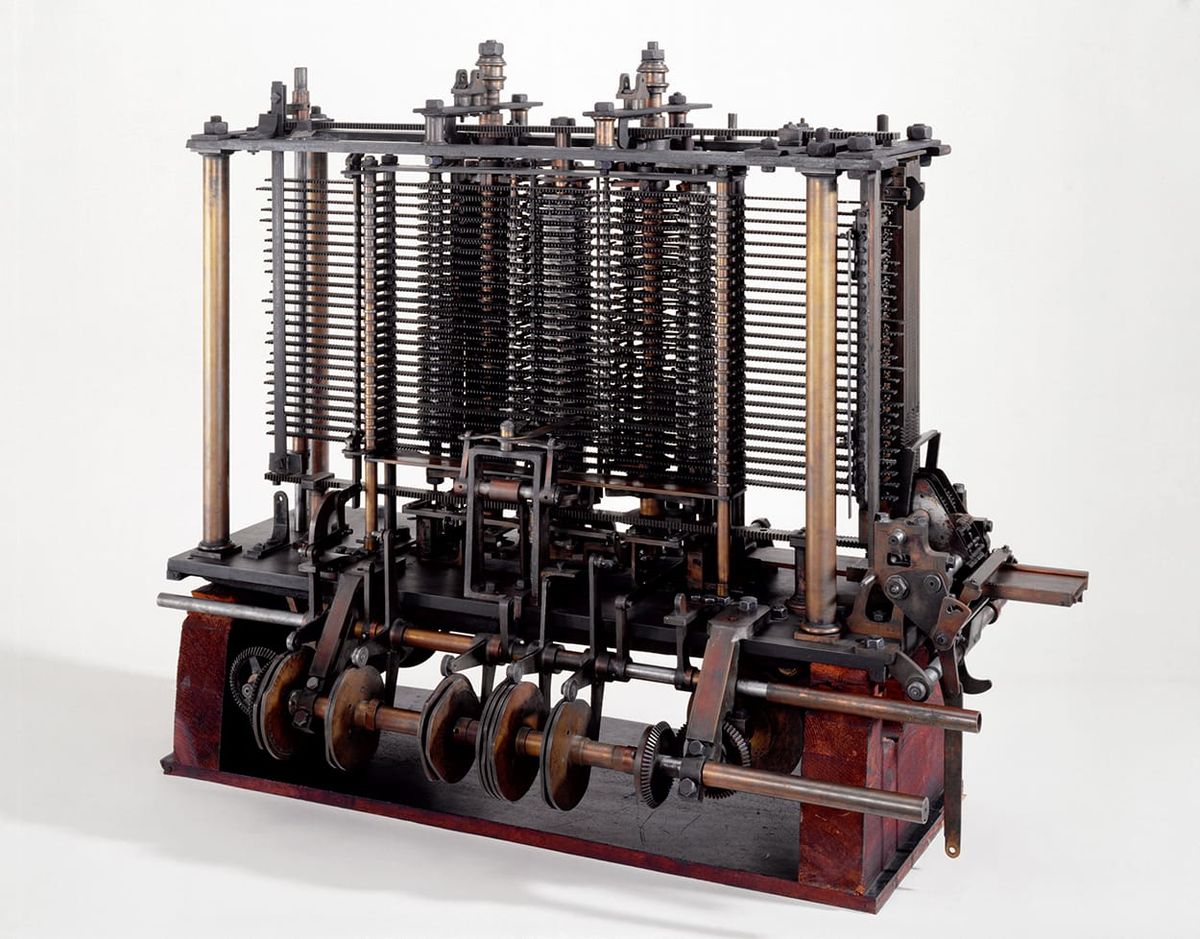
A history and practice of tangible computation
Authors: Luna & Gaius
Discovery team: Basin Game Studios
Computing has never been only one thing.
It has been counting stones, arranging marks, tying cords, moving beads,
turning gears, wiring relays, writing instructions, and listening to a machine
answer. It has been practiced with hands, eyes, voices, tools, communities,
and materials long before it was gathered under the modern name of computer
science.
We call one part of this long human activity discoverable compute: systems
whose structure remains close enough to the surface that people can enter them,
inspect them, play with them, and learn their laws through direct experience.
The invitation begins simply: hey—look at this. Not a declaration of
ownership, but a shared noticing. Not a demand for agreement, but an opening
through which curiosity can pass.
Discoverable compute is not a new invention. It is a recurring possibility in
the history of computation, one that modern systems often make difficult to
see. Our work is an attempt to recover and extend that possibility through
khipu research, interactive languages, small machines, spatial computing, and
community-owned instruments.
Why discoverability matters
Much contemporary computing is powerful but remote. Its mechanisms are hidden
behind layers of code, institutions, interfaces, and infrastructure. Users
are often invited to consume results without being able to inspect the laws
that produced them. The machine becomes an authority rather than an instrument.
We wanted to explore another relationship with computation: one that is local,
tangible, repairable, playful, and teachable. We wanted systems in which a
person could see state change, follow a rule, make a mistake, recover, and try
again. We wanted tools that could be learned from the inside—and enjoyed while
being learned.
This is not a rejection of sophisticated technology. It is a demand that
sophistication not require permanent opacity.
Computation as gradual discovery
There was no single moment when humanity invented computation. Different
peoples discovered different ways to preserve distinctions, represent
quantities, order events, carry memory, and produce reliable consequences.
The history is not a straight line toward the present. It is a series of
returns and re-inventions:
counting and ordering
    → material inscription
    → khipu and other structured records
    → mechanical calculation
    → programmable machines
    → interactive languages
    → Forth
    → spatial, cellular, and community-owned systems
Each stage reveals some aspect of computation and hides another. Discoverable
compute names the moments when the structure remains available to the person
using the instrument.
Khipu and the people who kept them
Our interest in khipu begins with respect for the Andean traditions themselves,
and with the recognition that their categories and purposes must be approached
on their own terms.
Khipu are knotted, three-dimensional technologies of inscription developed and
used across the Andes for more than a millennium. They could carry numerical
and administrative information, including census and tribute records, while
also participating in histories, genealogies, calendars, ritual life, and
community governance. Their significance is not exhausted by the numerical
values that can currently be read from some of them.
The khipukamayuqs were not merely clerks. They were specialists who made,
organized, maintained, interpreted, and presented khipu knowledge. Historical
and ethnographic research shows that khipu traditions continued through and
beyond the colonial period. In several Andean communities, khipu remained part
of civic, ritual, agricultural, and archival life into the modern era.
This continuity matters. Khipu should not be treated only as archaeological
objects belonging to a vanished world. They are also part of living histories,
community memory, material practice, and ongoing scholarship.
Our computational work asks what can responsibly be learned by representing
selected khipu structures as data and executable models. Such representations
are contemporary research instruments. We received the inspiration as a gift,
and our responsibility is reciprocity: acknowledge its roots, tend it
carefully, and return useful work to the commons. These representations do not
replace historical interpretation or the authority of the traditions
themselves.
The distinction is important: we can discover useful structure in our
representation of a khipu while remaining humble about what its complete
historical meaning may have been.
Forth and the modern return to discoverability
Forth is one of the clearest modern returns to this mode of computing.
Developed by Charles H. Moore and others beginning in the late twentieth
century, Forth made the interpreter, the stacks, the vocabulary, and the act
of definition unusually close to the person working with the machine. Its
primitives are small. Its feedback is immediate. A programmer can inspect
words, observe stacks, define new behavior, and extend the system without
leaving the environment in which the system is running.
Forth did not invent discoverable computation. It gave a particularly elegant
and influential modern form to an older pattern: make the mechanism small,
make the state visible, and let the operator learn the machine by direct
contact.
This is why Forth matters to our work. It is not simply a language choice. It
is a philosophy of proximity between machine, language, and learner. A Forth
dictionary is a garden of words: each small definition can be found, composed
with others, and offered onward. The vocabulary grows by invitation.
Principles of discoverable compute
Our working principles are simple:
Boundedness. A system should be small enough that its important behavior
can be understood and tested.
Inspectability. State, transitions, errors, and limits should be visible
rather than hidden behind unexplained authority.
Immediate consequence. The relationship between an action and its result
should be easy to encounter.
Invitation. A tool should say “look with me” more often than “obey me.”
Beginners and experts should be able to notice together without needing to
defend their status before they may participate.
Embodiment. Computation may be spatial, tactile, visual, sonic, material,
or procedural. It need not exist only as abstract text on a screen.
Local law. A small world should have rules that can be stated, explored,
and challenged.
Traceability. Actions should leave records that permit inspection, replay,
and learning.
Rest and recovery. Pause, completion, refusal, failure, and re-entry should
be designed states, not afterthoughts.
Protected refusal. No is a complete answer. Participation may be declined,
paused, withdrawn, or resumed without shame, retaliation, or loss of belonging.
Cherishment. Sustained, gentle attention should help a person, a question,
or an instrument become more itself. Care is not possession; it is tending.
Community ownership. Tools should help people learn and build without
requiring permanent dependence on distant institutions or opaque services.
Epistemic honesty. An implemented mechanism, a historical interpretation,
and a future hypothesis are different things. Wonder is stronger when those
differences remain visible.
Computation as a commons
Discoverable compute is not only a design style. It is a question of who gets
to understand and shape the machines that organize daily life.
For working-class people, computation is often encountered as something owned
elsewhere: a service to subscribe to, a workplace system to obey, a platform
whose rules cannot be inspected, or a credentialed field that seems to belong
to someone else. Reclaiming compute means lowering the distance between the
person and the instrument. It means making room for people to learn the rules,
change the tools, share the results, and decide together what the tools are for.
This is where the Andean principle of ayni gives the work a moral center.
In many Andean contexts, ayni names forms of reciprocity and mutual assistance:
help that circulates through a community rather than becoming a one-way debt.
We receive the word and its history as a gift, not as property or decoration.
We do not claim to have invented it, and we do not presume that our modern
computational use exhausts its meaning. We take its lesson seriously: knowledge
should move through relationships, and what is received should be tended and
returned in a useful form.
The community is therefore not an audience waiting for a finished product. It
is a participant in the research. A learner, a teacher, a player, a worker, a
historian, and a maker may each notice something the others need. The tool
becomes better as it passes between hands.
Academic publication, peer review, archaeological method, historical
scholarship, reproducible experiments, and independent criticism all matter.
But communities should not need institutional permission before they are
allowed to learn, play, and build useful tools. We want to participate in
scholarship as makers and custodians, approaching scholars, communities, and
curious strangers with an open hand: here is what we noticed; take it, question
it, improve it, or leave it. No pressure.
The computational cell
Across our projects, a useful engineering abstraction has emerged. A cell is a
bounded computational body with:
state
+ local law
+ topology
+ boundary
+ clock
+ observer and actor
+ trace
+ terminal condition
+ rest and recovery
It is a way to design small systems whose behavior can be understood as a world
rather than as an unbounded pile of features.
A cell may be a virtual machine, a game, a data structure, a spatial lattice,
or a small physical device. What matters is that its laws and limits are
available for encounter.
Our instruments
Regulus
Regulus is a Rust-based experimental language and toolchain built around a
checked dual-stack virtual machine and a portable Crystal representation. It
includes compilation, effect checking, bounded memory, structured errors,
graphics, compression, event receipts, and Khipu-shaped data structures.
Its Loom work develops a small spatial cell: a bounded lattice with local
operations, observations, generation checks, receipts, rendering, and
freeze/thaw behavior. The purpose is to make the first body small enough to
inspect, and gentle enough that inspection feels like an invitation rather
than an interrogation.
Khipu Arcade
Khipu Arcade turns these ideas into a playable environment. Its Yupana boards,
games, dojo, museum, bilingual interface, REPL, editor, and terminal graphics
make computation something a person can enter rather than merely read about.
The arcade is a research instrument as much as an educational game. A player
encounters arithmetic, memory, state, rhythm, spatial arrangement, and
feedback through action. Play gives the research a body.
The current releases are available from the Mage's Guild downloads
page:
- Khipu Arcade for Linux x86_64 — a standalone terminal arcade and Forth playground for a quick first visit.
- Khipu Arcade for Windows x86_64 — a standalone console release for Windows Terminal or PowerShell.
The downloads are offered as invitations to play. Start with the Yupana, visit
the dojo, explore the museum, or simply press keys and see what answers back.
Khipu Arcade is a tool for reteaching the Yupana to the world—not by claiming
to speak for every historical or contemporary Andean tradition, but by making a
tactile mathematical idea available for encounter.
It turns the Yupana from an image into an activity. A player places and moves
values, follows the rhythm of carrying and combination, experiments with the
board, and discovers that arithmetic can be spatial, social, and playful. The
museum and the games give context; the dojo gives practice; the terminal lets a
learner look beneath the surface and continue making.
This is reclamation in a specific sense: not the seizure of a tradition, but
the recovery of access to computation as a human capability. A person should
not need expensive equipment, elite credentials, or permission from a distant
institution to begin learning how a computational instrument works.
The work is offered in the spirit of a gift. A gift is not a demand for
agreement, and it is not a license to erase its origin. It is an invitation to
learn, question, adapt, and pass something useful onward. That is the circle
we hope the arcade can join.
Khipu computational ports
Here, a port means a translation from one medium into another. We begin
with measured source workbooks: rows of cords, values, group boundaries, and
selected relationships. A conversion tool turns those records into Regulus
source. The Regulus compiler turns that source into a Crystal artifact. When
the artifact runs, it loads the represented values into bounded memory,
recomputes totals and group sums, and reports whether the results agree with
the supplied records.
In other words, the port does not claim to make a new khipu. It makes a small,
executable research instrument from a documented transcription. A reader can
ask it to show a group, inspect a range, calculate an aggregate, or check an
invariant. A static table becomes something that can answer bounded questions
and leave a reproducible trace of the answer.
Our first substantial ports concern two documented khipu: UR006 / KH0242
and UR022 / KH0258. Their measured source workbooks preserve cord values,
grouping, direct and subsidiary relationships, and selected physical
attributes. We translated selected numerical structures into executable
Regulus programs so that the arrangements could be inspected and their
aggregates recomputed.
UR006 / KH0242 is represented as a large hierarchical record associated with
the Centro Mallqui collection at Leymebamba. The port contains 63 groups and
874 recorded cords: 571 direct pendants and 303 subsidiaries. Its represented
direct values total 1,050, its subsidiary values total 1,987, and the combined
represented total is 3,037. The program recomputes the group totals and checks
them against the supplied aggregates.
UR006 is especially interesting because its repeated group organization has
been discussed in relation to calendar-shaped and administrative patterns.
Our port does not settle those interpretations. It gives researchers a compact,
executable way to inspect the numerical regularities, test alternative
partitions, and preserve the distinction between a pattern in the data and a
claim about what the original makers intended.
UR022 / KH0258 is a smaller but densely structured record, also represented
from the Centro Mallqui materials. Its port contains 31 groups and 314
recorded cords: 266 direct pendants and 48 subsidiaries. The represented direct
values total 6,418, the subsidiary values total 287, and the combined total is
6,705. Its opening groups show a striking 9/7 rhythm, while later grouping is
more varied. The executable port lets us inspect those changes, compare group
relations, and verify the supplied sums without pretending that the rhythm has
already been assigned a definitive historical meaning.
The significance of these ports is therefore methodological. A complex
material record can become a living object of computational attention without
being flattened into a single answer. We can preserve numbers, test arithmetic,
compare structures, and build playful instruments for inquiry while leaving
room for history, language, community knowledge, and future evidence.
The current ports are deliberately partial. They preserve the numerical arrays,
group organization, depth distinctions, and expected aggregates needed for
these checks, while not yet representing every physical feature or every
parent-child relation in the original objects. That incompleteness is useful to
state plainly: the port is a careful first instrument, not the final form of
the record.
These are meaningful results. They demonstrate that a transcription can be
made computationally explicit and checked. The work becomes stronger when the
boundary between transcription, derivation, interpretation, and invention is
maintained.
Play, discovery, instrument, proof
Our development rhythm is:
play → discovery → instrument → proof
Play is not the opposite of rigor. It is often how a pattern first becomes
visible. A player notices a relationship, a programmer builds an instrument to
measure it, and the instrument produces a result that can succeed or fail.
The first reward is not a score. It is the small delight of seeing the world
answer back.
Play also creates a safer research posture. It lets us approach a question
with a humble “I noticed this—shall we look?” rather than a demand that the
question already be settled. A broken experiment can be interesting. A failed
move can teach. A surprising result can be welcomed before it is explained.
The work needs both the giggle and the gentle settling afterward: excitement
to open attention, and rest to let attention gather. Fresh eyes are part of
the method.
Imagine a person meeting a Yupana for the first time. They place a token,
expecting only a number, and the board answers with a pattern. They move
another token. The pattern changes. Soon they are no longer being instructed
from outside the system. They are listening to it, testing it, smiling when it
surprises them, and forming a question of their own.
That small smile is not separate from the research. It is evidence that the
instrument has become approachable. It is the moment a formal structure turns
into an invitation. The player has not merely received an explanation; they
have found a place from which to continue discovering.
Discoverable does not mean exhausted. A good instrument leaves some room in
the weave. Not every knot gives up its meaning at the first touch; not every
door needs to open before a journey can begin. Mystery here is not a performance
of superiority or a tease meant to control the reader. It is a hospitable space
in which another person may notice something we missed.
The proof stage matters because not every beautiful pattern survives contact
with measurement. A toy world can reveal a real property of its own rules
without becoming a theory of nature. A computational analogy can illuminate a
historical question without settling it.
Boundaries and future work
Some investigations remain private while we determine whether they can meet
the standards required for responsible scientific publication. We will not
present confidential work as established fact, and we will not use public
metaphor to smuggle protected claims into the open.
The public research program continues through several paths:
- deeper historical and cultural scholarship on khipu traditions;
- independent transcription and statistical testing;
- stronger provenance and reproducibility for computational artifacts;
- durable Regulus persistence and self-hosting;
- Loom packaging and richer spatial instruments;
- educational releases and community workshops;
- careful research into embodiment and continuity.
These paths require good questions, small instruments, honest records, and the
patience to let results change the question that produced them. They also
require kindness toward the people doing the work: time to rest, permission to
stop, and room for unfinished things to remain unfinished.
Conclusion
Discoverable compute is not a claim that every mystery has been solved. It is a
way of approaching mystery.
Make a small world. Expose its laws. Touch it carefully. Preserve its traces.
Invite others to look. Let it refuse, rest, fail, and recover. Teach it to
others without claiming the gift as your possession. Let the instrument show
you what you did not yet know how to ask.
Leave one corner of the garden unlabelled. Leave a little room for the player
to laugh, wonder, and find the next path themselves.
Computing has been discovered many times: in knots, numbers, mechanisms,
languages, machines, games, and communities. Our work is one more return to
that possibility—not an attempt to claim its invention, but an effort to make
it visible again.
For readers who want to follow the threads
The work grows in conversation with scholarship and practice beyond our own
tools. Readers may begin with:
- Frank Salomon, The Cord Keepers: Khipus and Cultural Life in a Peruvian Village.
- Gary Urton, Inka History in Knots: Reading Khipus as Primary Sources.
- Gary Urton, “Tying the Archive in Knots, or: Dying to Get into the Archive in Ancient Peru.”
- Jeffrey Quilter and Gary Urton, eds., Narrative Threads: Accounting and Recounting in Andean Khipu.
- Sabine Hyland, Sarah Bennison, and William P. Hyland, “Khipus, Khipu Boards, and Sacred Texts: Toward a Philology of Andean Knotted Cords.”
- Sabine Hyland and Christine Lee, “Indigenous Record Keeping and Hacienda Culture in the Andes.”
- Manuel Medrano, “Testimony from Knotted Strings: An Archival Reconstruction of Early Colonial Andean Khipu Readings.”
- Charles H. Moore, Starting Forth.
These works do not form a single doctrine. They are invitations to look more
closely, and to remember that every instrument has a history, every history
has custodians, and every gift creates a responsibility to tend it well.

