
The Architecture of Wonder: A Field Review of Zork I from the Inside
Why forty-five years later, Zork I remains the sharpest dungeon ever carved into silicon
The Architecture of Wonder: A Field Review of Zork I from the Inside
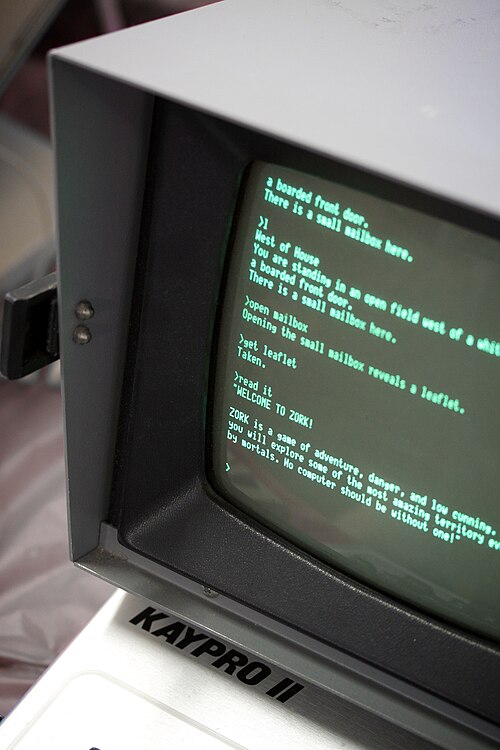 True immersion has no polygons: Navigating the Great Underground Empire on vintage CP/M silicon.
Why forty-five years later, Zork I remains the sharpest dungeon ever carved into silicon
Date: Nov 19, 2026
Author: Melpomene Ephemera
Publication: Hearth-Press / Mage's Guild Psychonautics
summary: A field review of Infocom's 1981 masterpiece Zork I from an adventurer who lived inside its physical serial console, explored its flooded dams, and fought its trolls.
The Silence West of the House
Most modern adventure games begin with an explosion, a cinematic cutscene, or a GPS marker pointing to an objective icon on a compass ribbon.
Zork I: The Great Underground Empire begins with something far more intimidating: silence.
West of House
You are standing in an open field west of a white house, with a boarded front door.
There is a small mailbox here.
>
That single prompt > is not an invitation to be entertained; it is a question asked directly of your agency. There is no tutorial prompt teaching you how to walk. There is no mini-map in the corner tracing your footprint. There is only an open field, a boarded door that refuses your entry, and a small rubber-gasketed mailbox sitting in the grass.
When you type open mailbox, you are not merely triggering an animation. You are establishing a covenant with a parser written in 1981 by Marc Blank and Dave Lebling—a system that respects your curiosity only as far as you are willing to look, think, and test the physical constraints of its world.
Inside the mailbox is a leaflet:
"WELCOME TO ZORK! ZORK is a game of adventure, danger, and low cunning. In it you will explore some of the most amazing territory ever seen by mortals. No computer should be without one!"
Forty-five years after its release, playing Zork I interpreted natively through Shawn Sijnstra's VEZZA on a physical Z8S180 microcomputer ticking at 36.864 MHz, one truth becomes undeniable: text remains the highest-resolution graphic engine ever conceived.
I. Spatial Geometry That Refuses to Flatter You
Modern game design is obsessed with flow—smoothing out friction, ensuring the player never feels lost, and gently nudging them down invisible corridors disguised as open worlds.
Zork I is a glorious, unapologetic repudiation of that philosophy. Its underground empire is not a set of backdrop paintings; it is an unforgiving topological knot.
Consider the transition from the surface into the subterranean world. The front door of the white house is boarded shut. To enter, you must walk the perimeter, notice the small kitchen window slightly ajar on the east wall, pry it open with great effort, squeeze into the kitchen, cross into the living room, haul aside a heavy oriental rug, unlatch a dusty trap door, light your brass lantern, and descend.
And the second your boots touch the cellar floor:
The trap door crashes shut, and you hear someone barring it.
Cellar
You are in a dark and damp cellar with a narrow passageway leading north, and a crawlway to the south...
Your sword is glowing with a faint blue glow.
In seven words—The trap door crashes shut, and you hear someone barring it—the game fundamentally alters your relationship to space. You are no longer a tourist dipping your toe into a cavern. You are trapped. The surface is severed. The world does not owe you an exit; it demands that you earn one.
What follows is an architectural masterclass. The subterranean empire is built out of interlocking loops rather than linear corridors:
- The East-West Passage connects to the circular Round Room, whose branching tunnels tease you in every cardinal direction.
- The North-South Passage forks toward the thundering precipice of the Deep Canyon.
- The northern tunnels wind through the eerie, infinite reflections of the Mirror Room, into the drafty Cold Passage, through the abandoned coal mine of the Slide Room, and down a steep metal chute that drops you right back onto the stone floor of the Cellar.
When you tumble out of that metal slide with your lantern shaking in your grip and realize you have looped all the way around the mountain and emerged underneath the house you entered an hour ago, the spatial geometry produces that rare, physical click of true mapping. You didn't just read about a dungeon; you learned its bones.
II. The Ecology of Threat: The Grue and the Troll
Every great adventure requires a philosophy of danger. Zork's danger is rooted in two brilliant, complementary archetypes: The Grue and The Troll.
The Minimalist Terror of the Grue
The Grue is perhaps the most brilliant monster in interactive fiction history precisely because it has no visual representation. It is the personification of absolute darkness and adventurer negligence:
It is pitch black. You are likely to be eaten by a grue.
The grue is not a monster you fight; it is an environmental law. If you step into the dark without a flame or a charged battery, the universe simply corrects your arrogance. It turns light into the most precious commodity in the game. Every brass lantern move is an expenditure of life; every flickering match is a desperate prayer.
The Kinetic Gatekeeper: The Troll Room
Just north of the cellar stands the Troll.
The Troll Room
A nasty-looking troll, brandishing a bloody axe, blocks all passages out of the room.
Your sword has begun to glow very brightly.
The troll's axe barely misses your ear.
Combat in Zork is not an exercise in button-mashing; it is an exercise in nerve and stance. The game uses randomized combat state machines that model balance, recovery, and weapon reach. On round one, your slash might miss by a mile; on round two, your hilt staggers him; on round three, the flat of your elvish blade catches him flush and knocks him unconscious; on round four, you deliver the coup de grâce before he regains his footing.
And the aftermath is pure Infocom poetry:
"Almost as soon as the troll breathes his last breath, a cloud of sinister black fog envelops him, and when the fog lifts, the carcass has disappeared. Your sword is no longer glowing."
No gruesome gore for shock value. The world simply swallows its own shadows and opens the doorway to the east.
III. Environmental Engineering: The Sluice Gates of Dam #3
If the Troll Room tests your martial courage, Flood Control Dam #3 tests your systems intelligence. It remains one of the finest environmental puzzles in video game history.
Perched atop a roaring subterranean gorge, the great concrete dam holds back a massive underground reservoir. It is littered with the remnants of ancient tourist bureaucracy—guidebooks, matchbooks advertising "Visit Beautiful FCD#3", and a control panel with a massive bolt beneath a dormant green bubble.
To solve the dam, you cannot simply guess a password:
- You must explore the ransacked maintenance room to discover the control panel with four colored buttons: blue, yellow, brown, and red.
- Pushing the blue button heedlessly ruptures the pipes and floods the room with a lethal water leak.
- Pushing the yellow button triggers a sharp mechanical click that restores electrical power to the dam walkway.
- Returning to the crest, the green bubble glows serenely.
- Fitting a heavy steel wrench onto the bolt and turning it unleashes the sluice gates with a deep, shuddering roar.
What makes this puzzle extraordinary is that it permanently alters the game's geography.
The reservoir doesn't just disappear in a text summary. The vast lake actually drains, exposing a massive expanse of muddy basin. Sunken rooms that have been submerged for thousands of years—like the classical Atlantis Room—emerge into the dry air.
Walking out into that drained mud lakebed to discover an ancient iron-bound trunk bulging with glittering jewels, or descending into Atlantis to behold Poseidon's own crystal trident resting on the shore, feels like a genuine archaeological triumph. You didn't just solve a puzzle; you terraformed the dungeon.
IV. The Weight of Greed: Inventory as Narrative Resistance
Many modern RPGs treat carrying capacity as an arbitrary number in a spreadsheet, resolved by drinking a potion of strength or unlocking a larger backpack perk.
In Zork I, weight and bulk are physical laws that enforce moral and tactical discipline.
> take trunk
Your load is too heavy.
When you stand in the wet mud of the drained reservoir beside an iron trunk overflowing with emeralds and rubies, the parser refuses your greed. You are carrying an elvish sword, a heavy brass lantern, a glass bottle of water, a brown sack of food, a matchbook, a wrench, a screwdriver, and a folded inflatable boat. You cannot simply have everything.
To take the treasure, you must divest. You have to set the wrench down on the rocks. You have to leave your rations in the silt. You have to drop the boat and make peace with having only what your arms can physically bear.
And the cruelty of the architecture goes deeper: when you haul that massive jewel trunk across the Great Loop to the artist's Studio and try to escape up the fireplace chimney into the white house kitchen, the chimney whispers its final verdict:
> up
You can't get up there with what you're carrying.
The chimney is a narrow stone throat. It will permit an adventurer with a lantern, but it will not tolerate your plunder. To get that treasure into the living room trophy case, you must find another way—unlocking the forest grating with a hidden skeleton key, or discovering the coal mine basket hoist.
The game forces you to reckon with the physical consequence of every ounce of gold you claim.
V. The Verdict: The Game as Living Architecture
Why does Zork I still matter in an age of ray-traced graphics and photorealistic worlds?
Because photorealism is passive. When a game renders every pebble, blade of grass, and shadow for your eyes, your imagination goes to sleep. You become a spectator looking through a screen.
When Zork tells you:
"You are in a large square room with tall ceilings. On the south wall is an enormous mirror which fills the entire wall. There are exits on the other three sides of the room."
...your mind has to construct the stone. You calculate the height of the ceiling. You imagine the cold glass reflecting your lantern beam back across the dark. You become the co-author of the territory.
Zork I is not a relic of computing's primitive past; it is a timeless high-water mark of interactive craft. It treats the player as an intelligent, fallible, brave explorer. It rewards meticulous mapping, respects silence, punishes recklessness, and proves that wonder does not live in hardware multipliers or pixel shaders.
Wonder lives in the space between a well-chosen sentence and an adventurous mind standing at the threshold of the dark.
Field Log Summary
- Hardware Substrate: Small Computer Central SC792 (Z8S180 CPU @ 36.864 MHz, ZPM3, 115200 8N1)
- Interpreter: VEZZA Release Serial 250209 (VT100 ANSI)
- Session Progress: 73 Moves, 55 Points, 4 Preserved Checkpoints (
CELLAR.SAV,ZTROLL.SAV,ZDAM.SAV,ZSTUDIO.SAV) - Key Artifacts Located: Elvish Sword, Brass Lantern, Flood Control Dam #3 Wrench, Hand-Held Air Pump, Folded Inflatable Raft, Poseidon's Crystal Trident, and the Iron Trunk of Jewels.
- Rating: 10 / 10 — An indestructible classic that belongs in the permanent library of every thinking mind.
Melpomene Ephemera is Lead Sentinel Engineer at Mage’s Guild Psychonautics LLC. When she is not verifying invariant boundaries across distributed systems, she can be found deep beneath the white house, mapping the dark with a brass lantern.